Thinking about moving to Austin but worried you will pick the wrong neighborhood? If you want a central location, distinctive homes, and easy access to some of the city’s most recognizable corridors, Travis Heights deserves a serious look. This guide will help you understand how the neighborhood works day to day, what tradeoffs come with its charm, and how to approach your home search with more confidence. Let’s dive in.
Why Travis Heights Stands Out
Travis Heights sits just south of downtown Austin in the South River City planning area. According to the City of Austin, the Travis Heights subdistrict is generally bounded by Lady Bird Lake to the north, Interstate 35 to the east, Oltorf Street to the south, and South Congress to the west.
That location is a big reason relocating buyers pay attention to it. You are close to downtown, near one of Austin’s best-known commercial corridors, and positioned for a lifestyle that can blend driving, rideshare, biking, and transit instead of depending on a long suburban commute.
The neighborhood also has a distinct built character. The neighborhood association describes Travis Heights as eclectic, with architecture ranging from late-1880s Victorian homes to 1970s mid-century modern properties.
What Daily Life Feels Like
A big part of Travis Heights’ appeal is its park-like setting. Big Stacy Park, Little Stacy Park, and the Blunn Creek corridor help shape the area’s feel and give residents access to green space within the neighborhood.
The City of Austin identifies both Big Stacy Neighborhood Park and Little Stacy Neighborhood Park in the 78704 area. City information on Blunn Creek notes that the creek flows through both parks before emptying into Lady Bird Lake, which helps explain why this part of central Austin feels more shaded and residential than many newcomers expect.
If you are relocating from out of state, this is the kind of neighborhood where the lifestyle value is tied closely to location and setting. You are not just buying a house. You are buying into a central Austin routine that often includes nearby parks, quick downtown access, and a more established streetscape.
Commuting From Travis Heights
For many new Austinites, commute logistics can make or break a move. Travis Heights tends to work best if you want a close-in neighborhood and are comfortable using a mix of transportation options depending on the day.
Downtown Access
South Congress is one of the most useful nearby transit corridors. CapMetro Rapid Route 801 runs between Southpark Meadows, downtown, and the University of Texas, with service every 10 to 15 minutes.
That gives you a practical car-light option for downtown trips. If you work centrally or expect to spend frequent time downtown, that can be a real quality-of-life advantage.
Airport Access
Airport access matters when you are relocating, travel often for work, or expect frequent visitors. CapMetro Route 20 serves Austin-Bergstrom International Airport, travels through Riverside Drive, and continues to downtown and UT.
CapMetro says Route 20 runs every 15 to 30 minutes, seven days a week, and the ride to downtown is about 35 minutes. For some buyers, that makes Travis Heights easier to manage than neighborhoods that feel more cut off from core Austin routes.
What This Means For Relocating Buyers
In practical terms, Travis Heights is a strong fit if you value centrality over maximum house-and-lot size. It is especially appealing if you are comfortable balancing convenience, character, and access rather than optimizing for a simple freeway commute.
Housing Style And Lot Reality
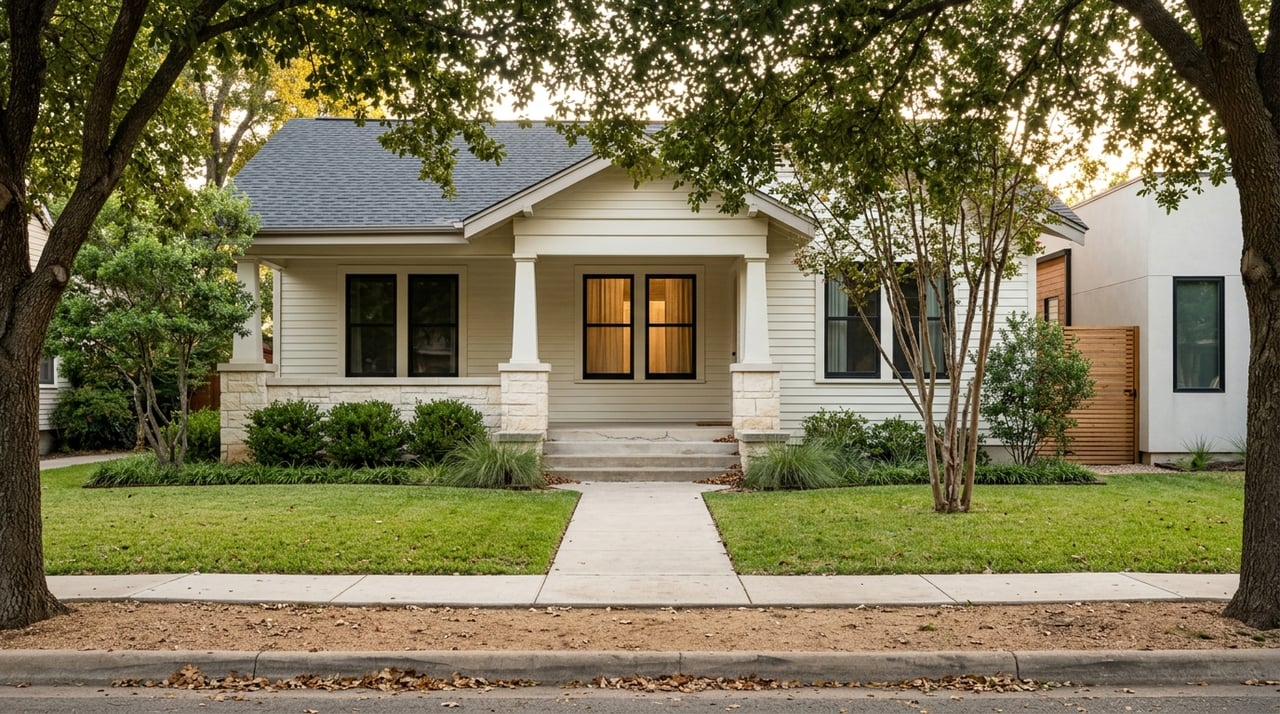
One of the biggest reasons buyers fall for Travis Heights is the housing stock. Historic bungalow and Craftsman influences are a core part of the area’s identity, and the broader neighborhood includes a wide mix of older architectural styles.
That variety can be exciting, but it also means homes may differ a lot from one block to the next. You may see a renovated historic property, a modest bungalow with project potential, or a home with design updates that reflect a later era.
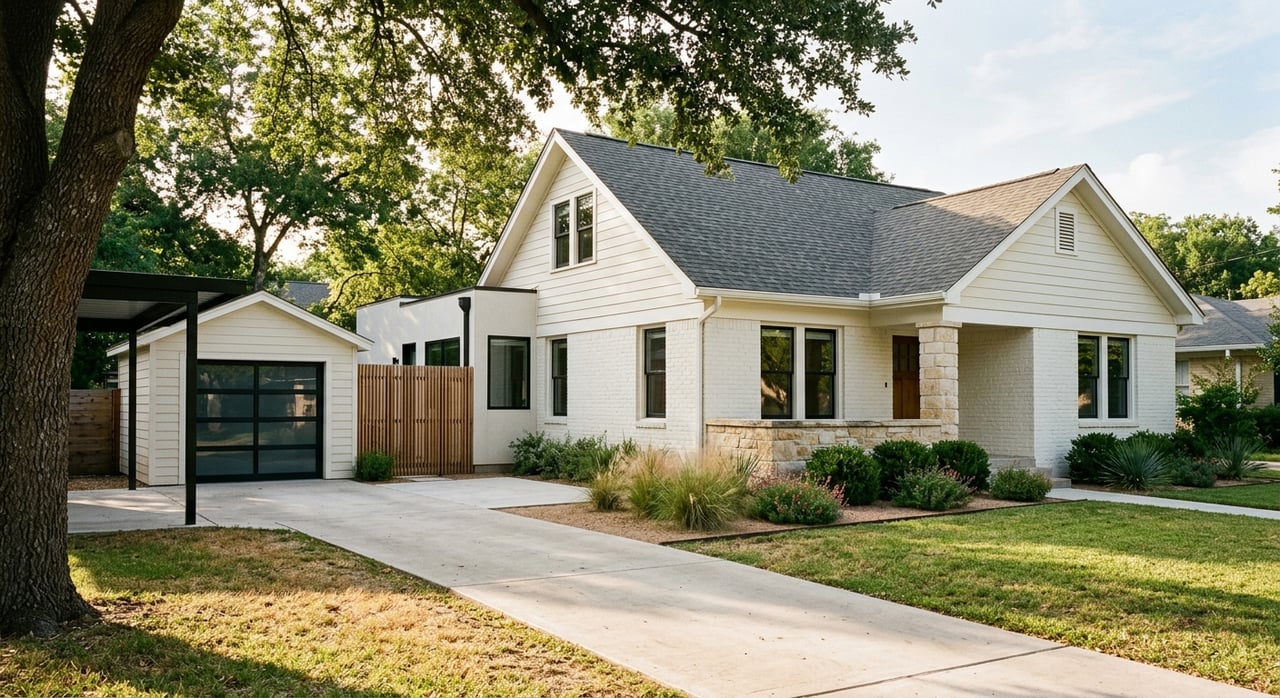
According to a 2023 City of Austin housing paper using Travis County appraisal data, the median residential lot size in Travis Heights is 7,234 square feet, with typical lots around 50 feet wide. The same report notes that smaller bungalow-style homes often sit closer to the street and may feature side driveways, rear garages, and alley access.
That lot pattern affects more than curb appeal. It can shape how you park, where guests leave their cars, how outdoor space is arranged, and what future changes may be practical.
Parking Matters More Than You Think
In Travis Heights, parking is not a minor detail. It is one of the first things you should evaluate when comparing homes.
The South River City neighborhood plan includes proposed rules in the Travis Heights-Swisher subdistrict related to garage placement, parking placement, impervious cover, and prohibiting parking in the front yard. For buyers, that means a home’s driveway setup and garage location can matter just as much as square footage.
When you tour homes, it helps to ask simple, practical questions:
- How many cars can the property realistically support?
- Is parking easy for guests?
- Does the garage location work for daily use?
- Is alley access part of the setup?
- Will the lot layout create tradeoffs later?
These details can have a big impact on your day-to-day experience, especially if you are moving from a newer neighborhood where off-street parking is easier to take for granted.
Historic Status And Renovation Planning
If you love older homes, Travis Heights can offer exactly the character you want. But before you make an offer, it is smart to understand how historic status may affect future plans.
Parts of Travis Heights and Fairview Park were added to the National Register of Historic Places on July 30, 2021. The district information also notes that National Register listing by itself does not restrict a non-federal owner’s use, while local historic district standards do.
That distinction matters. If a property is historically designated under local rules, Austin’s historic review process applies to exterior alterations, additions, permanent site work, sign installation, and stand-alone new construction.
The City of Austin says routine maintenance and in-kind repairs do not require historic review. It also notes that smaller projects may be approved administratively, while larger projects may go to the Historic Landmark Commission.
A Simple Historic Review Checklist
Before you move forward on a home, consider these questions:
- Is the property historically designated?
- Have previous exterior updates already been completed?
- Would your planned changes involve additions or exterior alterations?
- Are you looking for move-in ready condition or future project potential?
- Does your timeline allow for review if needed?
For relocating buyers on a tighter schedule, these questions can help you avoid surprises. A charming older home can be a great fit, but only if the property lines up with your renovation goals and timeline.
What The Market Is Telling You
Travis Heights remains a premium central Austin neighborhood. Redfin reported a median sale price of $725,000 in Travis Heights over the last three months, compared with $542,000 for Austin overall over the three months ending May 2026.
At the same time, the broader Austin market has become more buyer-friendly than it was during the pandemic-era frenzy. Redfin described Austin as the slowest housing market in the country in early 2026, and its May 2026 metro data said only 9.1% of Austin homes sold above asking.
For you, that can mean more room to compare properties, negotiate, and make thoughtful decisions. Still, close-in homes with strong updates or especially appealing character may continue to attract quick interest, so preparation still matters.
Redfin also reported that most homes for sale in Travis Heights stay on the market for about 68 days. That can create a little more breathing room than buyers might expect in a central Austin neighborhood.
How To Search Efficiently From Out Of Town
If you are flying in for a quick home-search trip, a focused plan will save time. Travis Heights is not a neighborhood where you want to evaluate homes on style alone.
The most efficient approach is to pre-screen for historic status, verify whether planned exterior changes could trigger review, check realistic parking capacity, and compare the home’s current renovation level with your appetite for project work. Those steps follow directly from the neighborhood’s lot patterns, parking considerations, and historic-review rules.
For logistics, Route 20 and Rapid 801 can serve as useful transit anchors for airport and downtown planning. Even if you expect to drive most of the time, understanding those routes gives you a better sense of how the neighborhood connects to the rest of the city.
Is Travis Heights Right For You?
Travis Heights can be a great fit if you want central Austin access, mature trees, established parks, and homes with architectural personality. It is often a smart choice for buyers who care as much about neighborhood feel as they do about the house itself.
It may be less ideal if you want a larger, more uniform lot, easier parking, or a home that is unlikely to raise renovation questions. The neighborhood’s value comes from its location and character, and those strengths come with tradeoffs.
For many relocating buyers, that tradeoff is worth it. If you understand the basics before you start touring, you can narrow your search faster and make a better decision with fewer surprises.
If you are planning a move and want neighborhood-specific guidance, off-market insight, and a smoother search process in central Austin, schedule a personalized consultation with The Holm Team.
FAQs
What is the location of Travis Heights in Austin?
- Travis Heights is in the South River City planning area just south of downtown Austin, generally bounded by Lady Bird Lake, I-35, Oltorf Street, and South Congress.
What parks are in the Travis Heights neighborhood?
- Big Stacy Neighborhood Park and Little Stacy Neighborhood Park are key neighborhood parks, and Blunn Creek runs through both before reaching Lady Bird Lake.
What transit options serve Travis Heights commuters?
- Nearby transit options include CapMetro Rapid Route 801 on South Congress for downtown and UT trips, plus CapMetro Route 20 for airport, Riverside, downtown, and UT access.
What should relocating buyers know about Travis Heights parking?
- Parking deserves close attention because lot layouts, side driveways, rear garages, alley access, and local parking placement considerations can all affect daily convenience.
What should buyers know about historic homes in Travis Heights?
- Some properties may be affected by local historic review for exterior changes, additions, permanent site work, and certain new construction, while routine maintenance and in-kind repairs generally do not require review.
What is the Travis Heights housing market like for buyers?
- Travis Heights remains a premium close-in neighborhood, but Austin’s broader 2026 market has become more buyer-friendly, which can give you more room to compare homes and negotiate.